

You may wonder why a leadership meeting in Nairobi matters to your daily life and future. A senior United Nations official recently told global institutions they cannot win back public confidence unless Africa plays a larger part in shaping international decisions. Ahunna Eziakonwa, United Nations Under-Secretary-General and Special Adviser to the Secretary-General, spoke ahead of the Trust Summit set for October 21 to 23. She said trust depends on whether institutions keep promises and represent the people they serve. This conversation goes straight to the heart of what Global Trust means for all of us.
Africa is no longer asking for a seat at someone else's table, and that deserves attention. Eziakonwa said Africa is a co-architect of a system that is renewed, and not only repaired. She explained that the starting point for trust is to treat Africa as a shaper of our common future, not as a recipient of global change. This shift matters because many countries believe they have too little influence over international decisions. When citizens feel left out of that process, confidence fades, and Global Trust suffers deeply.
There are persistent questions about the credibility of multilateral institutions and the way influence is shared across the world. People also ask about the gap between pledges on climate finance and the resources that actually arrive. For African countries, the debate touches on representation, access to development finance and the power to shape global economic rules. Eziakonwa said reform must go hand in hand with stronger domestic performance if Global Trust is to be rebuilt. Governments must deliver on commitments in areas such as agriculture, education and public services without delay.
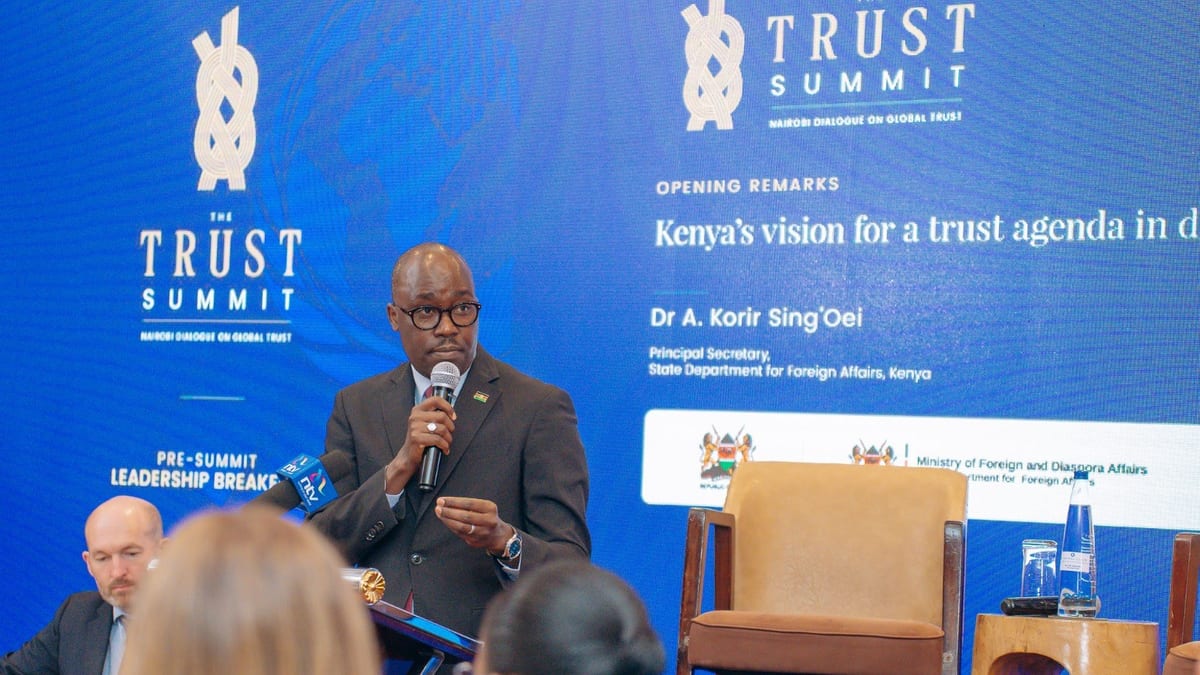
The Nairobi meeting was designed to move this argument from principle into practice without delay. It brought governments, international organisations, civil society, businesses and young people together to define commitments and track progress. Abraham Korir Sing'Oei, Kenya's Principal Secretary for Foreign Affairs, said institutions must open decision making to more participants. He said large institutions must make room for non-state actors right away without exception or delay. The Trust Summit is meant to be a space where everyone works as co-creators in building a trustworthy future for Global Trust.
Young people deserve a role in shaping institutions because their economic prospects and political participation are at stake. Kenya Model United Nations secretary-general Deborah Ndanu Nzomo said institutions cannot expect young people to trust them without showing confidence in their ability to contribute. She said the future depends on whether young people believe in institutions and whether those institutions show they believe in young people. Trust must be mutual, and that idea sits at the heart of Global Trust for everyone.
The October summit will face the challenge of turning commitments into action assessed by independent observers. Proposed outcomes include a Nairobi Statement on Global Trust, a summit report, a Trust Barometer dashboard and a joint task force to track implementation. There will also be a report examining Africa's trust landscape in detail and full context. Whether these mechanisms produce lasting change depends on whether governments and institutions make commitments, disclose progress and accept scrutiny. For Africa, the stakes go beyond restoring confidence in individual institutions and national leaders today.
The deeper issue for Africa concerns its ability to help shape international rules while ensuring its own governments earn the trust of citizens. Restoring faith in existing institutions matters, yet the work goes further than that alone and demands action. It is about building a system where African voices carry weight and where promises are kept. The path forward requires accountability from global partners and from national leaders alike at every level. When that happens, Global Trust can move from an idea to a lived reality for people everywhere.