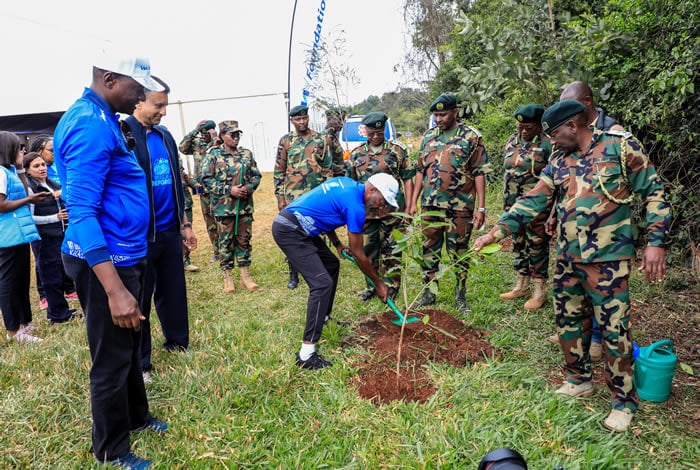
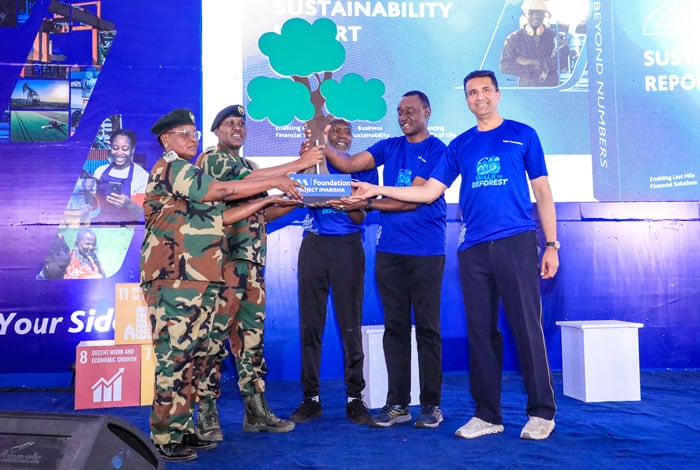
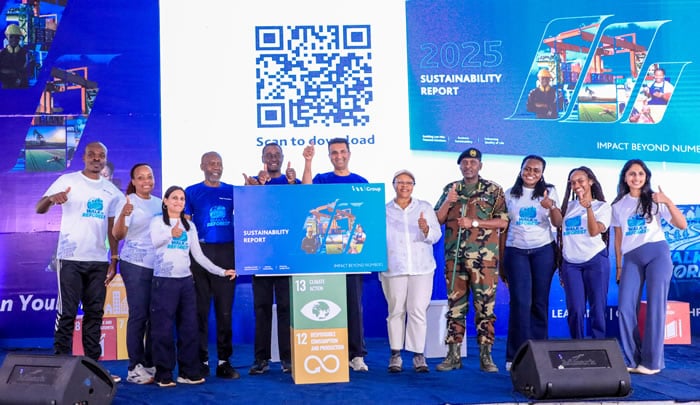
I&M Group’s first formal Sustainability Report links financial inclusion, responsible banking and environmental restoration. Its launch, held alongside the handover of Project Imarisha at Ngong Road Forest, offered both strong numbers and visible evidence of what corporate sustainability can accomplish.
Banks are accustomed to measuring deposits, loans and profits. Measuring lives changed, forests protected and communities strengthened requires a broader ledger.
I&M Group has set itself an ambitious target: to positively affect 50m lives by 2030. Its first formal Sustainability Report says more than 10m people have already been reached. The report represents an important attempt to give structure, targets and accountability to work that might otherwise be scattered across lending programmes, internal operations and corporate philanthropy.
Its launch was held alongside the handover of Project Imarisha, a KSh162m, three-year restoration of the Ngong Road Forest Sanctuary. This was a fitting setting. The consequences of responsible banking can sometimes be difficult to see in a financial statement. A protected 695-hectare urban forest, complete with a 14.2km perimeter fence and improved ranger facilities, provides a more immediate illustration.
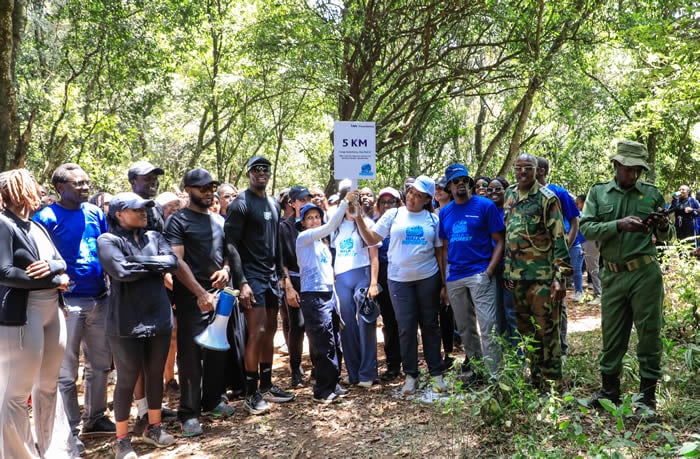
After the launch and handover, guests participated in a 5km walk through the forest. The route allowed them to experience its natural beauty, refreshing scenery and importance as one of Nairobi’s remaining green spaces. It also demonstrated that Project Imarisha is not merely a collection of expenditure figures. It is an investment in a living public asset that residents can visit, enjoy and help preserve.
For a financial institution established in 1974 as a community-based lender serving the Ismaili community, proximity has long been part of I&M’s identity. The new report translates that history into the contemporary language of environmental, social and governance performance.
From community lender to regional group
I&M is no longer simply a Kenyan bank. It is an East African financial group with operations extending to Mauritius.
It serves 965,940 customers across five countries through 119 branches and a workforce of 3,601 people. Kenya remains its largest market, accounting for 673,606 customers and 71 branches. Rwanda, with 146,576 customers, has developed into a substantial second market.
The group has 6,828 shareholders and interests covering banking, bancassurance, asset management and real estate. Its scale and diversity mean that sustainability can no longer be treated solely as the responsibility of a charitable foundation. It must increasingly influence how the group lends, invests, hires, procures and manages risk.
The report is a sign that this transition is taking place. Instead of presenting sustainability as a collection of separate community projects, I&M has organised its work around three pillars: enabling last-mile financial solutions, building a sustainable business and enhancing quality of life.
Its formal ESG journey is comparatively young. The group became a signatory to the United Nations Global Compact in 2023, formalised its Sustainability Action Plan in 2024 and joined the UN Principles for Responsible Banking in 2025.
The pace of that progression is encouraging. Within three years, I&M has moved from making an international commitment to establishing an internal plan and publishing a report that provides a baseline against which future performance can be measured.
Its governance structure also indicates that sustainability is moving closer to the centre of the organisation. The Board Sustainability Committee is chaired by Rose Kinuthia and includes Sarit Raja Shah, the Group Executive Director, and Gauri Ajay Gupta, the Group Director for Corporate Advisory and Sustainability.
Their presence gives the committee access to the executives responsible for turning policy into operational decisions.
The board is composed of 67% men and 33% women, with independent directors accounting for 56% of its membership. Women hold 43% of senior leadership positions, up from 40% the previous year. In Rwanda, the bank has received a Gold Gender Equality Certification.
These gains suggest that I&M is treating inclusion not only as a customer proposition but also as an internal governance priority.
Financial inclusion meets commercial growth
The report’s most significant section concerns last-mile financial solutions. This is where social impact and commercial strategy most clearly meet.
Digital lending increased by 79%, from KSh11.5bn in 2024 to KSh20.6bn in 2025. Financing delivered through SACCOs and fintech companies rose by 96%, from KSh3bn to KSh5.9bn. Lending to micro, small and medium-sized enterprises grew by 40%, from KSh13bn to KSh18.3bn.
These increases are important because they show that I&M does not view financial inclusion merely as philanthropy. It sees underserved consumers and enterprises as a significant part of its future market.
Kenya’s established corporate-banking sector is intensely competitive. The greater opportunity for expansion lies among small businesses, informal traders and individuals who have traditionally been costly to serve through branches. Digital channels, fintech partnerships and collaboration with SACCOs allow the bank to reach these customers more efficiently.
The results are already visible. I&M recorded customer growth of 33%, while 86% of its customers are digitally active.
Digital lending can help individuals manage short-term cash-flow needs and give entrepreneurs access to working capital. Ecosystem financing can also use the reach and local knowledge of SACCOs and fintech companies to serve customers who may not have extensive conventional banking histories.
The opportunity for I&M will be to build on this growth by showing how access to finance improves financial resilience and business performance. Future reports could supplement lending totals with information about business expansion, employment creation, repayment patterns and the long-term financial health of customers.
Such disclosures would allow the group to demonstrate not only how many loans it provides, but also the economic value those loans create.
Building the foundations of green finance
I&M’s green-finance contracts increased from KSh3.5bn to KSh3.7bn. Although this is more modest than the growth recorded in digital and MSME lending, it provides a foundation on which the bank can build a larger green portfolio.
Agricultural finance moved from KSh2.4bn to KSh2.3bn. The small decline reflects the complexity of financing a sector exposed to unpredictable rainfall, crop cycles, price volatility and fragmented value chains.
That complexity also presents an opportunity. A regional bank that develops strong expertise in climate-smart agriculture, irrigation, renewable energy, storage, insurance and agricultural technology could occupy an increasingly valuable position in East Africa’s transition to a more climate-resilient economy.
I&M’s recognition as “Agri Lender of the Year” gives it a platform from which to deepen this work. Its next phase could involve designing financial products that help farmers adapt to climate change while also strengthening food security and rural livelihoods.
The report also refers to blue-carbon investments. As the portfolio grows, providing more information about the projects supported, the environmental standards applied and the expected results would help stakeholders understand this emerging area of investment.
The significance of a first sustainability report is that it creates a measurable starting point. I&M has now disclosed the size of its green portfolio. Future reports can show how quickly it expands and which sectors benefit.
Making the business itself more sustainable
The second pillar focuses on I&M’s own operations.
Energy use per employee declined from 2 megawatt-hours to 1.6MWh, while paper use fell from 6.6 reams per employee to 5.9. The group also reports a waste-recycling rate of 98%.
These improvements show how digitalisation and operational efficiency can support environmental goals. As more transactions move online and internal processes become less dependent on paper, the bank can reduce costs and its physical footprint at the same time.
Water consumption increased from 13.1 cubic metres per employee to 14.2. This provides the bank with a clear operational area to address in the coming reporting period, particularly through conservation measures, monitoring and more efficient facilities.
Procurement from local suppliers stood at 87%, down from 91%, while procurement from local SMEs moved from 68% to 61%. Even after the decline, local suppliers continue to account for a substantial majority of the group’s procurement.
The proportion directed to special groups—including women, young people and persons with disabilities, increased from 5% to 8%. This indicates that the bank is beginning to use its purchasing power to promote broader economic participation.
The next challenge will be to combine regional procurement efficiency with stronger participation by local SMEs and special-interest groups. Doing so would extend I&M’s sustainability impact beyond its customers to the businesses that form part of its supply chain.
Employee engagement stands at a healthy 81%. Together with the growth in women’s representation in senior leadership, this suggests that the group is also paying attention to the workforce needed to implement its strategy.
Project Imarisha makes the strategy visible
The third pillar, Enhancing Quality of Life, contains some of the report’s most tangible social and environmental results.
I&M reports investing KSh250m in ecosystem restoration and KSh39m in economic empowerment. It says it has grown more than 1m trees, reached 300,000 people, supported 440 scholarships and empowered 38,000 women and young people.
Project Imarisha stands out because of its scale and location.
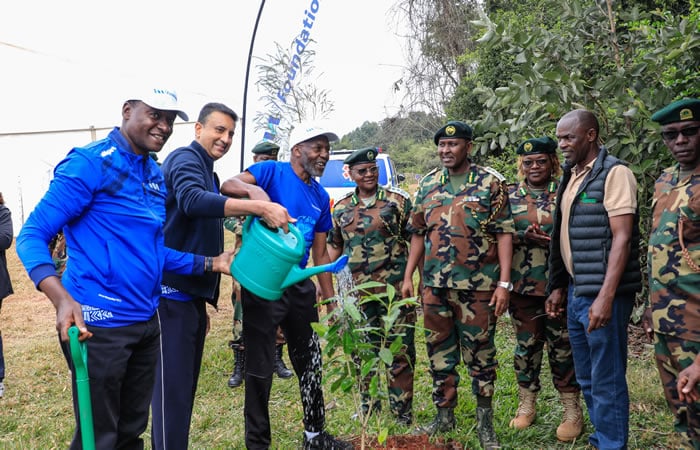
Implemented through the I&M Foundation, the KSh162m project includes 14.2km of fencing around the 695-hectare Ngong Road Forest Sanctuary. The protected section stretches from the edge of Kibera to the Southern Bypass near Karen.
The project has also delivered five controlled-access gates, seven ranger houses, ablution facilities, boreholes, an internal security trail and an expanded tree nursery.
These are practical investments. A forest cannot be preserved through tree planting alone. It requires boundaries, water, security, maintenance, rangers and controlled access.
Ngong Road Forest is Nairobi’s largest remaining indigenous urban forest. Its location between some of the city’s wealthiest neighbourhoods and one of its largest informal settlements makes it both valuable and vulnerable. It has faced pressure from encroachment, dumping, illegal logging and insecurity.
The new infrastructure should make it easier to protect the forest while improving its safety and accessibility. The 5km walk undertaken by guests after the launch illustrated the result. Participants could see the forest’s beauty, enjoy its refreshing environment and appreciate the value of preserving such a space within a rapidly expanding city.
The forest serves several constituencies at once. It is a recreational space for walkers and runners, an outdoor classroom for school groups, a habitat for wildlife, a source of cleaner air and an important urban carbon sink.
I&M Foundation has also clarified that the initiative is limited to green-park infrastructure, with no hotels, restaurants or hospitality developments planned. This helps protect the project’s conservation focus and ensures that the forest remains a public environmental asset.
The initiative aligns with Kenya’s campaign to grow 15bn trees by 2032. I&M says the trees it has planted have recorded a survival rate of approximately 85%. This emphasis on survival is important. Planting trees is only the beginning; nurturing them until they become established is the more demanding task.
A credible platform for the next phase
I&M’s first Sustainability Report is both an account of progress and a statement of intent.
Its strength lies in linking sustainability to the core business of banking. The growth of digital, ecosystem and MSME financing demonstrates that expanding financial access can support both social impact and commercial growth. Its investments in leadership diversity, operational efficiency and inclusive procurement show that sustainability is also beginning to influence the organisation internally.
Project Imarisha gives these commitments a visible public expression. The forest fence, ranger facilities, boreholes, nursery and security infrastructure will continue to serve Nairobi long after the launch ceremony. The walk through the forest allowed guests to experience what those investments mean beyond the figures.
The report also establishes useful baselines for the work ahead. I&M can now build on its KSh3.7bn green-finance portfolio, strengthen agricultural lending, deepen local procurement and develop more detailed emissions reporting.
As its reporting framework matures, the group will also be able to provide greater detail on financed emissions, the classification of green assets and the long-term outcomes experienced by customers and communities. These are natural next steps for a bank that has only recently formalised its sustainability strategy.
For now, I&M has done something important: it has placed sustainability within the same conversation as lending, growth, risk and governance.
The bank’s purpose is “Empowering Your Prosperity”. Its first Sustainability Report broadens the meaning of that promise. Prosperity, it suggests, is not measured only by the size of a balance sheet. It can also be found in a growing enterprise, a financially connected household and a protected forest where Nairobi residents can walk five kilometres beneath the trees and emerge refreshed.