

The International Fund for Agricultural Development (IFAD) has officially welcomed Matteo Marchisio as its new Country Director and Representative in Kenya, with a mission to deepen IFAD Kenya rural development efforts and advance the long-standing partnership between the organization and the government. Marchisio formally assumed his role after presenting his credentials to Musalia Mudavadi, Kenya’s Prime Cabinet Secretary, marking a new chapter in their nearly five-decade collaboration focused on empowering rural communities and addressing challenges like food security and climate resilience.
As rural areas navigate a growing youth population, evolving digital technologies, and shifting environmental pressures, the partnership between IFAD and Kenya continues to adapt. Marchisio emphasized that IFAD’s mandate aligns closely with Kenya’s vision for agricultural transformation. This includes empowering farmers to reduce production costs, strengthen value addition and agribusiness, attract public and private investment, and generate sustainable employment opportunities in rural regions. By fostering these initiatives, the collaboration seeks to create lasting progress for communities that form the backbone of the country’s economy.
IFAD’s support for IFAD Kenya rural development spans investments in smallholder farmers, rural enterprises, and financial services. Key areas of focus include strengthening agricultural value chains, improving market access, managing natural resources sustainably, and building resilience to climate-related risks. For instance, IFAD-financed projects are actively addressing Kenya’s El Niño preparedness by enhancing early warning systems, reducing risks for vulnerable households, and supporting rapid recovery efforts. These interventions ensure that rural populations can better withstand shocks while maintaining their livelihoods and productive assets.
Looking ahead to 2027, IFAD plans to develop a new country strategy that builds on existing partnerships with national and county governments, the private sector, farmers’ organizations, and development partners. This strategy aims to align future investments with Kenya’s national development priorities while addressing emerging challenges such as climate adaptation, youth engagement, and innovation. By leveraging collaborative frameworks, IFAD and Kenya intend to create scalable solutions that contribute to the country’s long-term stability and growth.
Marchisio also commended Kenya’s active role in IFAD’s governance and its financial contribution to the organization’s Fourteenth Replenishment, particularly during a time of fiscal constraints. He noted that this pledge reflects Kenya’s dedication to multilateral cooperation and sustainable rural development. Such support reinforces the country’s commitment to global partnerships that prioritize equitable progress and environmental stewardship, ensuring that IFAD’s initiatives continue to resonate with local needs and aspirations.
Since joining IFAD in 1977, Kenya has cultivated a robust partnership rooted in shared values and development objectives. Over nearly five decades, IFAD has funded more than 20 programs and projects in the country, mobilizing nearly US$1.4 billion to drive rural transformation, agricultural development, and climate resilience. These investments have directly improved livelihoods, enhanced community resilience, and opened new pathways for millions of rural Kenyans to participate in the nation’s economic growth and development.
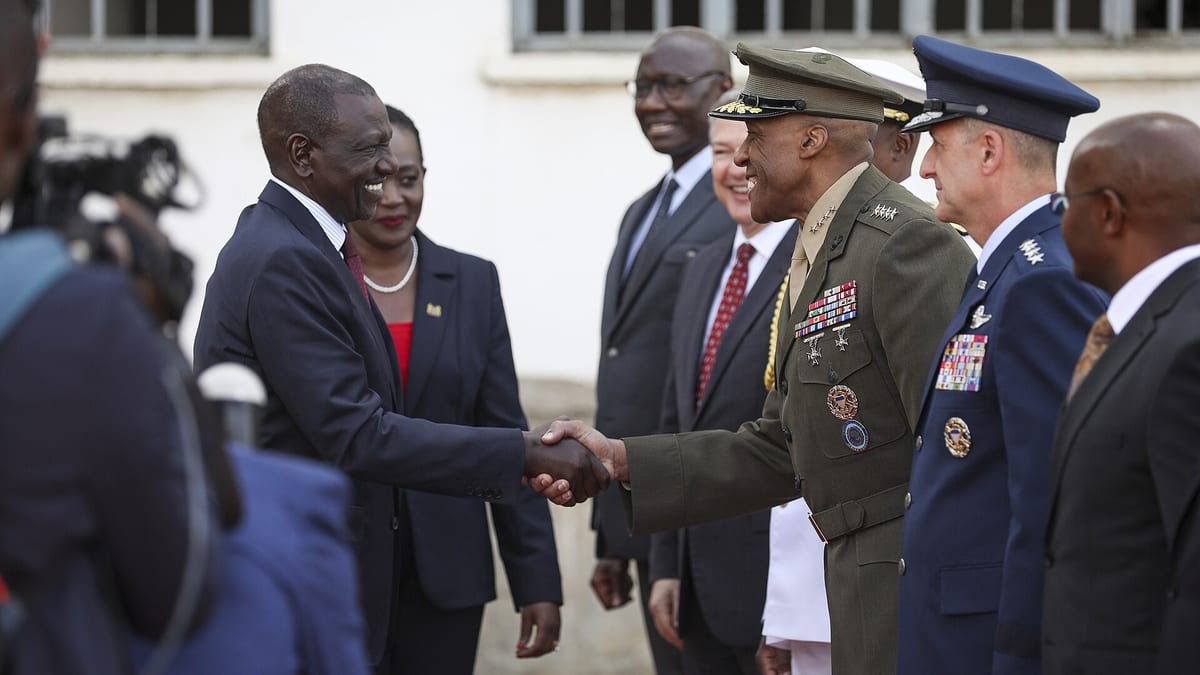
Image: Kenya President meets General Michael Langley at the 2025 African Chiefs of Defense Conference (ACHOD25) with 37 African countries meeting in Nairobi, Kenya from May 28-30, 2025.jpg by Chief National Guard Bureau, CC BY 2.0, via Wikimedia Commons