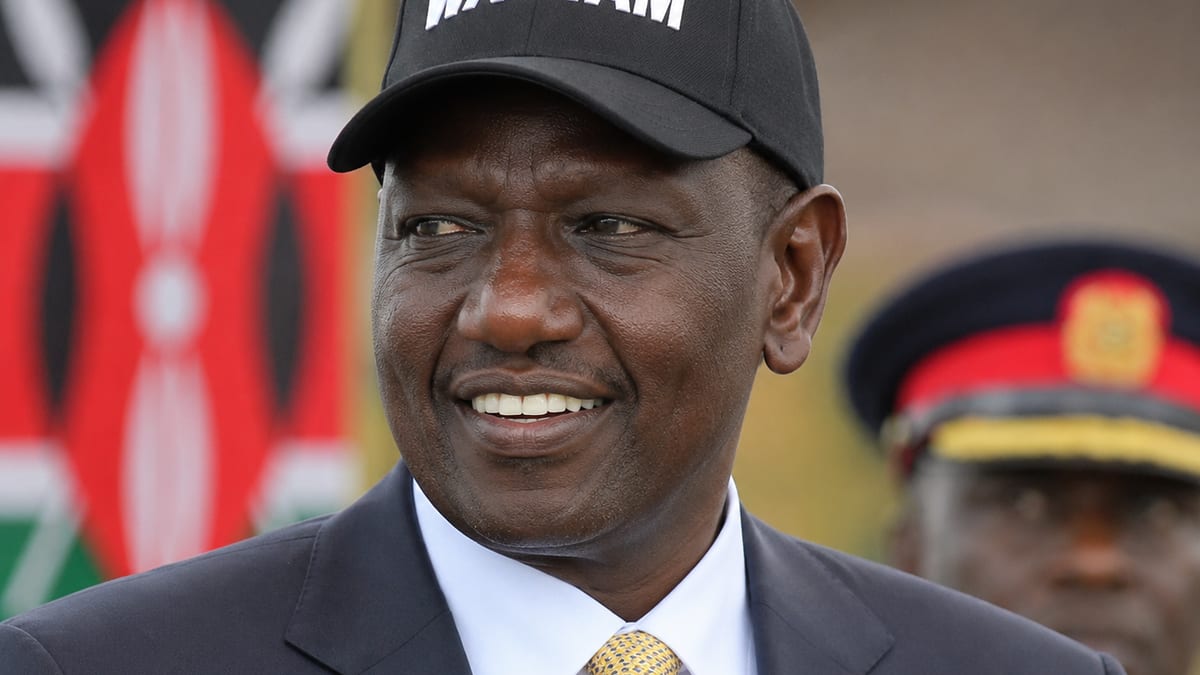
Wantam became popular during and after the Gen Zs’ anti-Finance Bill protests in 2024. Wantam is a demand that William Ruto serve a single term as president. That would be an undesirable historical outcome, hence why the president’s allies coined tutam as the comeback slogan to counter the impact of wantam chants. What the wantam vs tutam debate opens is the consideration of whether indeed a one-term presidency is what Kenya actually needs. So here is the question: what if we changed the constitution to state that a president is elected to lead for 15 years unless impeached? Before you throw stones or call me names, hear me out.
The problem with a five-year term, renewable once for a maximum of ten years in Kenya’s 2010 constitution, is twofold. During the first term, the actions of the president are mostly tailored towards winning a re-election. The appointments he makes. The policies he champions. The developments he funds. All these are carefully selected to be politically popular so that he can easily win a re-election, instead of focusing on actual and at times painful reforms that will have long-term benefits for Kenyans. Then comes the second term, and the opposite problem shows up. Once re-election is no longer possible, the very incentive that kept behaviour in check during the first term just switches off.
Economists who study lame-duck terms have found this pattern again and again: term limits make corruption more frequent in a leader’s final, unwinnable term, even though they also shorten how long he can get away with it, since the accountability that comes from facing voters again disappears the moment there is no next election left to lose. The same research traces an inverted-U relationship between a leader’s time in office and how well off the public ends up. Early tenure tends to improve government performance, since the leader and the team around him are still learning the job, but the risk of entrenched corruption grows the longer that tenure runs unchecked. So the right length for a term ends up depending on which of those two effects wins out, and on what checks exist to keep the corrosive one in line.
That debate is already alive in Kenya. A sitting senator’s 2024 bill wanted to stretch presidential and parliamentary terms from five years to seven, and the idea turned out so contentious that the Senate’s public-submission portal crashed under more than two hundred thousand responses. Afrobarometer researchers have since found that ordinary Kenyans remain attached to the two-term cap, mostly because, elsewhere on the continent, presidents who managed to scrap or extend their term limits altogether have tended to stay in power for decades rather than years. Anyone proposing a longer single term needs to take that pattern seriously, unless the proposal comes paired with a credible, separate way to remove a leader who abuses it.
Kenya would not be the first country to try a longer, non-renewable presidency. Mexico’s no re-election principle grew out of the revolt against Porfirio Diaz’s three decades in power, and once it became constitutional law, it held for more than seventy years of one-party government, mostly because it stopped any single leader from putting down roots. President Lopez Obrador even signed a public pledge in 2019 promising he would never seek a second term, and Mexicans still treat that norm as close to sacred. The Philippines went further, after its own experience of dictatorship. The 1987 constitution gave the president a single, six-year, non-renewable term, built specifically to dismantle the conditions that produced Ferdinand Marcos’s rule. A presidential spokesperson later explained the logic behind that choice, during a debate over whether to bring re-election back: a single term lets a leader focus entirely on delivery instead of on winning the next contest. A 2021 survey found that three out of four Filipinos still preferred that single six-year term over any alternative. What is interesting is that among the minority who wanted something else, the average preference worked out to roughly two terms of about seven years each, which adds up to almost exactly fifteen years in total, even though none of the people who answered that poll was sitting down to draft a constitution.
There is a simpler pattern worth noticing, too, beyond how a term gets designed. In countries that are described as politically stable, leadership tends to change rarely, and when it finally does change, the push usually comes from outside rather than from within. Singapore’s People’s Action Party has governed continuously since 1959, and Lee Kuan Yew served as prime minister for thirty-one years, remaining the dominant figure in Singaporean politics right up until his death in 2015. Analysts and historians credit that continuity with the country’s jump from a poor, divided port city to one of the world’s most efficient and prosperous states, even as those same analysts document tight control over opposition parties, the press, and dissent throughout that same period. Rwanda tells a related story. Paul Kagame, in power since 2000, is widely credited with stabilising the country after the 1994 genocide and meeting many of the growth and development targets laid out in Rwanda’s Vision 2020 programme, and a 2015 referendum that passed with over ninety eight percent support could keep him in office until 2034. Freedom House, for its part, documents the surveillance, intimidation, and suppression of dissent that have gone along with that stability. What stands out across both cases is simple: long, rarely interrupted leadership and durable stability tend to travel together, for better and for worse, far more often than five-year electoral cycles would suggest.
Iran shows this pattern in its most extreme form, and it is the version this proposal wants to avoid above all else. In 1953, Britain and the United States ran a covert operation that toppled Iran’s first democratically elected prime minister, Mohammad Mossadegh, after he nationalised the country’s oil industry, and that operation restored an absolute monarchy which itself lasted a further twenty-six years. After the 1979 revolution replaced that monarchy with the Islamic Republic, Supreme Leader Ali Khamenei held power for almost thirty-seven years. He survived decades of Western sanctions, the 2009 protest movement, and the 2022 nationwide unrest that followed Mahsa Amini’s death, among other things. His rule ended in February 2026, when a joint United States-Israeli military operation killed him during an active war, after sanctions and earlier strikes had already left the government worn down economically and militarily. Where a country has no real internal mechanism for removing a leader who has lost legitimacy, the eventual correction tends to come from outside, and often violently so. A constitution that wants to hand someone the long runway of a fifteen-year presidency has to build the opposite of Iran’s situation into itself: a genuine, internal, periodic off-ramp.
That off-ramp is the second half of this proposal. Alongside the single fifteen-year term, the constitution would set up a standing tribunal that convenes every four years, plus on any earlier occasion when a qualifying public petition backed by documented evidence gets filed, all in order to consider one question: should the president be impeached? Its membership would be drawn broadly, made up of members of Parliament, representatives of registered political parties, civil society groups, media houses, the Law Society, human rights bodies, the judiciary, and trade unions, with each group nominating its own representative rather than the executive making the appointment. The tribunal would get ninety to one hundred and eighty days to receive evidence, hear the president’s defence, and vote, and a two-thirds majority, the same threshold the United States and Brazil both use for presidential removal, would be required to impeach. Once that threshold is met, the deputy president would take over as a one-year caretaker while a fresh election gets organised. That is essentially a more time-bound version of the succession process already written into Kenya’s constitution for when a presidency falls vacant early.
Kenya has actually just tried out a version of this mechanism, and the results are worth learning from. In October 2024, the National Assembly voted 281 to 44 to impeach Deputy President Rigathi Gachagua on eleven charges. The Senate then sat as the trial body, mustered the required two-thirds, and removed him after upholding five of those charges. The process did get contested in the High Court, over concerns that public participation had been rushed, and Gachagua himself maintained throughout that the whole exercise was a political takedown orchestrated by the president he had once helped elect, rather than a genuine accountability process. Whoever was right on the merits, the episode points to a weakness in leaving impeachment entirely inside a legislature that the president’s own coalition controls. The same machinery meant to check a president can just as easily get turned against a deputy, a rival, or eventually a successor, depending on who holds the numbers at the time. A tribunal that also seats the bar, the bench, civil society, the press, and labour alongside MPs would be far harder for any single faction to capture in either direction, including the presidency itself.
A broadened tribunal still needs guardrails in both directions. It has to be hard to abuse in a way that railroads an innocent president, and just as hard to abuse in a way that shields a guilty one. Petitions should only move past a screening stage once they are backed by documented evidence rather than rumour, and petitioners who file frivolous claims ought to face disqualification from filing again, since comparative legal scholarship warns that an easy, low-cost process simply produces more impeachment talk instead of more accountability. Hearings should be public and broadcast. Courts should keep the power to review the fairness of the process itself, which is exactly the kind of review Kenya’s High Court already carried out in the Gachagua case, while leaving the underlying political judgment to the tribunal. Tribunal seats should be filled by each represented institution electing its own nominee on a staggered basis, so that no single appointing authority, including the presidency, gets to pack the panel. And the two-thirds threshold cuts both ways. It is high enough to stop a passing, bare majority from removing a president simply over policy disagreements, even though, as critics of supermajority rules have argued going back to the Federalist Papers, it also means a genuinely corrupt president could survive just by keeping a little over a third of a broad, multi-institution tribunal loyal to him. That is a real risk worth admitting upfront rather than assuming away.
None of this works without a functioning opposition doing the unglamorous work of assembling petitions and keeping an eye on government performance between elections, and Kenya’s recent experience is a warning about how easily that function can disappear. After the 2024 protests, President Ruto brought the country’s most prominent opposition figure, Raila Odinga, and his ODM party into a broad-based government. A November 2025 survey by TIFA Research found that even as overall approval of the arrangement went up, nearly half of Kenyans still worried it had blurred the line between government and opposition and weakened democratic checks and balances. Then Odinga died in October 2025, and his death left ODM visibly unsettled over whether to return to opposition or stay inside government ahead of 2027. Kenya’s opposition function has, so far, depended more on one person than on any durable institution. A Wantam presidency would need opposition treated as a permanent constitutional function, with its own funding, standing, and direct access to the tribunal, instead of a label that gets absorbed into government whenever a deal gets struck at the top.
Put the proposal’s arithmetic side by side, and it looks fairly straightforward. A good president gets fifteen uninterrupted years, which is long enough to take a development agenda from announcement all the way to maturity, instead of restarting it every five years, and without the distortions that come from either campaigning for a second term or coasting through an unaccountable one. A bad president, meanwhile, is never more than roughly five years from facing removal, since the tribunal sits on a four-year cycle and a successful impeachment triggers a fresh election within a year. That ends up being roughly the same rhythm of accountability Kenyans already expect from their ballot, just delivered through evidence and institutions instead of a guaranteed rematch at the polls.
There is a real case against all of this. Both long-term models this piece draws on, Mexico’s and the Philippines’, eventually settled on six years rather than fifteen, which suggests that most societies that have tried no re-election still prefer a tighter leash than the one proposed here. Afrobarometer’s data on African leaders who escaped term limits altogether is a warning about what unchecked tenure can turn into, no matter how good the surrounding institutions look on paper. And the same logic that lets a two-thirds threshold protect a good president from a vindictive removal also lets a determined, well-resourced bad one survive scrutiny, simply by keeping just enough of a broad tribunal on his side. A fifteen-year Wantam presidency is, in the end, a bet that a genuinely independent, multi-institution removal mechanism can do the accountability work that re-election currently does badly, and it would only turn out as good as the safeguards Kenyans actually build around it.
This is the more serious version of what the chants outside Parliament were demanding: a leader who governs for the country in front of him rather than for the next election, no matter whether the term on offer runs five years or ten or fifteen. A constitution bold enough to give a president fifteen years to actually build something, paired with a tribunal strong enough to remove him within five years if he does not deliver, would finally answer that chant on its own terms: one term, genuinely served, instead of two terms merely survived.