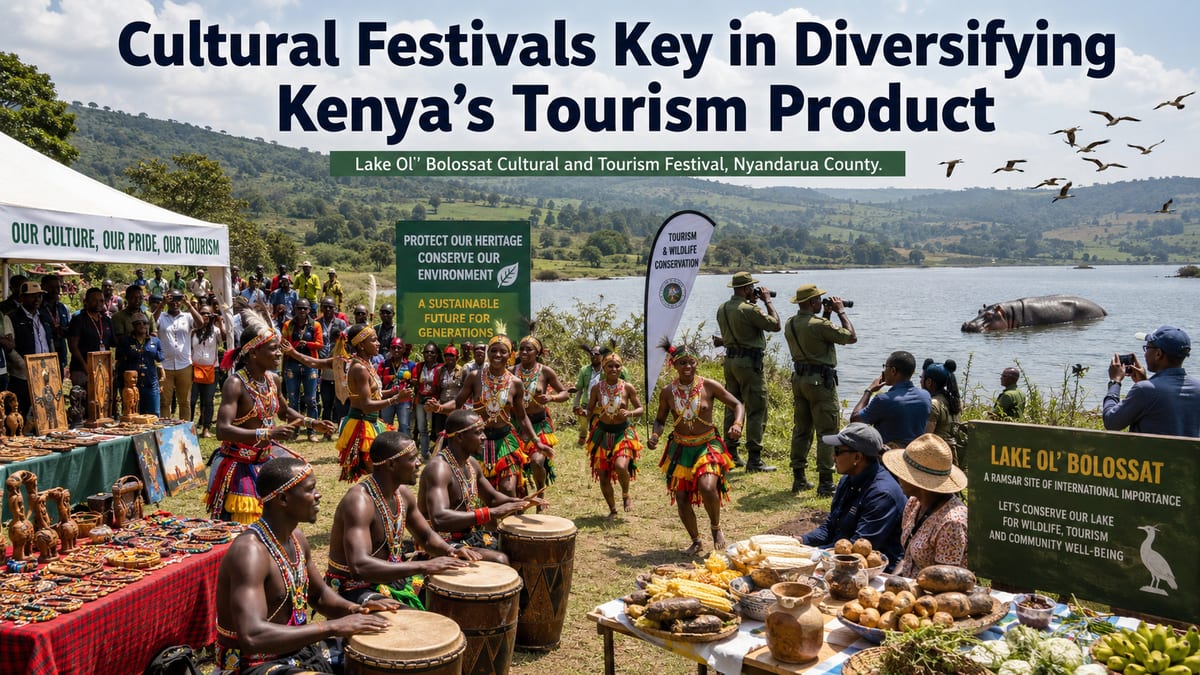
Cultural festivals are key in diversifying Kenya’s tourism product by offering visitors unique experiences that showcase the country’s rich heritage, traditions, wildlife, and natural beauty. These festivals are also helping Kenya achieve its goal of attracting 5 million tourists by 2027.
The Kenya Tourism Board (KTB) Chief Executive Officer, Ms. June Chepkemei, highlighted the importance of cultural festivals during the closing of the 2026 Lake Ol’ Bolossat Cultural and Tourism Festival held on July 12th and 13th in Nyandarua County.
Ms. Chepkemei said festivals such as Lake Ol’ Bolossat provide opportunities to discover new tourism attractions and expand Kenya’s tourism offerings. She noted that the lake’s unique environment, cultural importance, and ongoing conservation efforts make it an important destination for sustainable tourism.
She also praised the efforts of the Nyandarua County Government, local communities, the Kenya Wildlife Service (KWS), and the Wildlife Research and Training Institute (WRTI) in protecting the lake and supporting wildlife conservation initiatives, including the hippo relocation programme.
The Kenya Tourism Board continues to support cultural festivals across the country and is working on developing a national cultural festival calendar to help visitors plan their trips in advance.
Kenya hosts many cultural festivals throughout the year, including the Lamu Cultural Festival, Tobong’u Lore Festival, Maa Festival, Ura Gate Festival, and Rusinga Island Festival. These events allow visitors to experience Kenya’s diverse cultures through traditional music, dance, crafts, sports, and local food.
The Lake Ol’ Bolossat Cultural and Tourism Festival brought together culture, tourism, and conservation. The event showcased Nyandarua County’s cultural heritage, natural attractions, and the importance of protecting the environment.
Conservation was a major focus of the festival, with attention given to the hippo translocation programme at Mukindu Public Dam. The programme, led by KWS and WRTI, aims to improve human-wildlife coexistence by moving hippos to safer habitats while ensuring communities can use the dam safely.
Nyandarua County Director of Tourism, Bernard Mwai, said the festival plays an important role in promoting the county as a tourism destination. He described Lake Ol’ Bolossat as a key attraction and said the county plans to continue hosting the festival annually to attract more visitors.
The festival also created economic opportunities for local businesses. Hotels, restaurants, artisans, transport providers, and other service providers benefited from the increased number of visitors.
Stephen Kamau, Manager of Express Hotel and Lounge in Ol Kalou, said the festival increased customer numbers and sales, creating more job opportunities for local residents.
The Lake Ol’ Bolossat Cultural and Tourism Festival demonstrated how cultural celebrations can support tourism growth, protect the environment, and improve livelihoods. It provides a good example of how Kenya can promote sustainable tourism while celebrating its diverse cultures and natural resources.