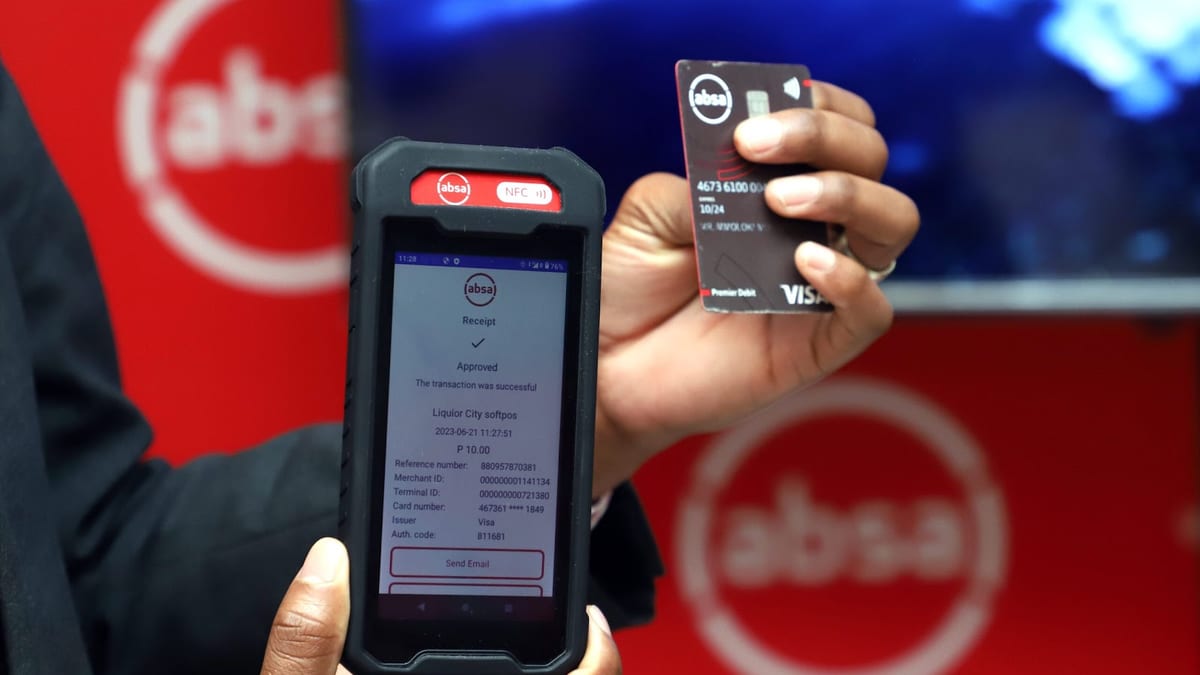
Absa Mobi Tap arrived in Kenya in June 2023, built through a partnership between Absa Bank and Visa to give small businesses a way to accept card payments without a card machine. The idea is fairly simple once explained: a merchant’s own Android phone becomes the point-of-sale device, so that a customer’s Visa contactless card can be tapped against it instead of a separate terminal. That single shift removes a cost barrier that has kept many small traders locked out of card acceptance for years.
Getting started follows three steps that stay consistent across most reporting on the app: download Absa Mobi Tap from the Play Store, set up a merchant profile, and begin accepting payments. Once the profile is active, the merchant simply enters the transaction amount on the phone, and the customer taps their Visa contactless card on the back of the same device to pay. A PIN entry follows when required, which completes the purchase in much the same rhythm as tapping a card on any regular POS terminal.
The Google Play listing for Absa Mobi Tap Kenya lays out the feature set in plain terms, and each point lines up with how the solution has been described elsewhere. Card payments are accepted securely, contactless transactions run through NFC on a compatible smartphone, and every transaction requires a PIN before it clears. No POS hardware is needed at all, and the listing also states there are no monthly fees or device rental charges attached to using the app. That absence of recurring cost matters for small traders, since many POS rental agreements elsewhere in the market carry ongoing charges long after the initial setup.
Before any of that works in practice, both sides of the transaction need a few things in place, and it helps to separate what falls on the merchant from what falls on the customer.
On the merchant’s side, the requirements are:
- An Absa Merchant Facility or Merchant Account already set up with the bank
- An Android smartphone running version 6 (Marshmallow) or newer
- NFC support built into that same device
- The Absa Mobi Tap app downloaded and installed from the Play Store
On the customer’s side, the requirements are just as short:
- A Visa card enabled for contactless payments, whether debit or credit
- The card held close enough to the merchant’s phone for the NFC signal to connect
- A PIN on hand, in case the transaction amount calls for one
Neither list involves buying new hardware, which keeps the barrier to entry fairly light on both ends of the sale.
The app has kept evolving since launch, with recent updates adding multi-currency support, a web-to-app link for a partner service called Zendawa, and an updated help screen. Multi-currency support suggests the app is being positioned for merchants who deal with more than just Kenyan shillings, which fits businesses serving tourists or regional trade.
Mobi Tap should not be confused with AbsaPay, a separate feature inside the main Absa Mobile Banking app that lets individual customers tap their own phone to pay at a till. Mobi Tap sits on the merchant side of the transaction instead, turning a business owner’s phone into the device that receives payment rather than the one that sends it. Kenya was among the first markets to receive this solution, alongside Botswana, Ghana, Uganda, Tanzania, and Seychelles, as Absa extended the same underlying technology across several of its African operations.
Reports on the ground point to fairly practical adoption so far, with ride-hailing drivers, restaurant owners, salon operators, and hardware shop owners named among the early users. These are businesses that typically move around, work irregular hours, or simply never had the volume to justify a fixed POS terminal in the first place.
Judged purely on what it sets out to do, Absa Mobi Tap succeeds at a fairly narrow but genuinely useful task: letting small businesses accept Visa card payments using hardware they already own. The lack of monthly fees or rental costs stands out as a clear advantage over conventional POS agreements, based on what the listing itself states. The requirement for an Android device running Marshmallow or later, along with NFC support, means the app depends on hardware many but not every trader already carries. For the traders it does reach, the app removes one of the more stubborn obstacles standing between cash-only operations and full participation in Kenya’s digital economy.